The Secret Behind Your Smartphone’s Battery: How Different Configurations Affect Voltage, Current, and Capacity
Batteries are the heart of any mobile device, supplying the power needed to run various features and functions. However, not all batteries are the same. Depending on the size, shape, and design of a device, different types of batteries are used to optimize performance and efficiency. In this blog, we’ll explore some common smartphone battery configurations and how they differ in terms of voltage, current, and capacity

On this page
- Single Battery Configuration
- Advantages of Single Battery Configuration
- Disadvantages of Single Battery Configuration
- Dual Series Battery Configuration
- Advantages of Dual Series Battery Configuration
- Disadvantages of Dual Series Battery Configuration
- Dual Parallel Battery Configuration
- Advantages of Dual Parallel Battery Configuration
- Disadvantages of Dual Parallel Battery Configuration
- L-Shaped Battery Configuration
- Advantages of L-Shaped Battery Configuration
- Disadvantages of L-Shaped Battery Configuration
- Conclusion
A battery is a device that converts chemical energy into electrical energy. It consists of or more electrochemical cells, which serve as the basic units of a battery. Each cell has two electrodes—the anode and the cathode—and an electrolyte, a substance that facilitates the flow of electric charge between them.
When a battery is connected to a circuit, a chemical reaction occurs at the electrodes, generating a flow of electrons from the anode to the cathode. This flow of electrons is known as current, measured in amperes (A). The difference in electric potential between the electrodes is called voltage, measured in volts (V). The total electric charge a battery can deliver at a given voltage is referred to as its capacity, measured in ampere-hours (Ah) or milliampere-hours (mAh).
The voltage, current, and capacity of a battery depend on the type and size of its cells, as well as how they are arranged within a battery pack. A battery pack is a collection of cells connected together to function as a single unit. Cells can be connected in different ways, such as in series, in parallel, or a combination of both, which impacts the overall voltage, current, and capacity of the battery pack. These factors ultimately influence the performance and efficiency of the device that relies on the battery.
In this blog, we will explore some common smartphone battery configurations and how they function.
Single Battery Configuration#
The single battery configuration is the simplest and most commonly used type of battery pack. It consists of either a single cell or a group of identical cells connected in parallel. This configuration provides a fixed voltage and current capacity, both of which depend on the type and size of the cell.
For example, a standard AA battery typically delivers 1.5 volts with a capacity of around 2,000 mAh.
If a device operates within a low voltage and current range, a single battery configuration is sufficient. However, smartphones require higher voltage and current to power their advanced features and functions. As a result, most smartphones use multiple battery cells arranged in different configurations to meet their power demands.
Advantages of Single Battery Configuration:#
- It is easy to manufacture and widely available.
- It is safe and reliable, with low self-discharge and no memory effect.
- It is suitable for low-power devices that do not need high voltage or current.
Disadvantages of Single Battery Configuration:#
- It has a low energy density and capacity, which limits the performance and battery life of the device.
- It cannot provide high voltage or current, which may be required for some features and functions of the device.
- It may not fit the shape or size of the device, which may affect the design and aesthetics of the device.
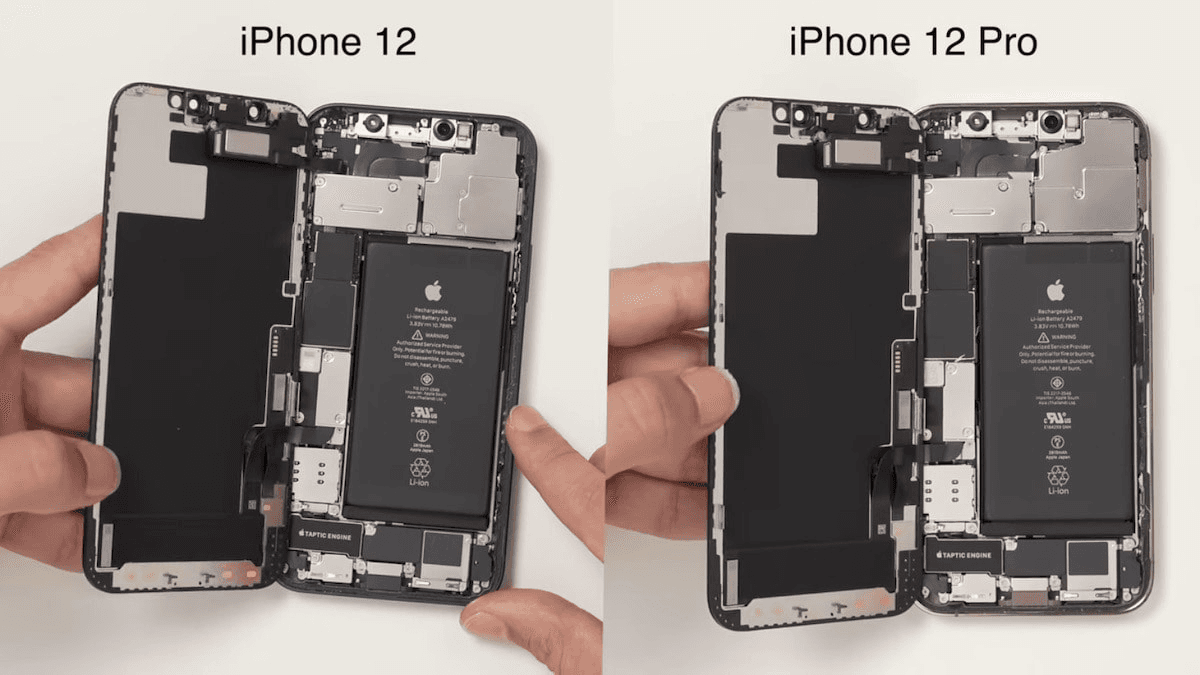
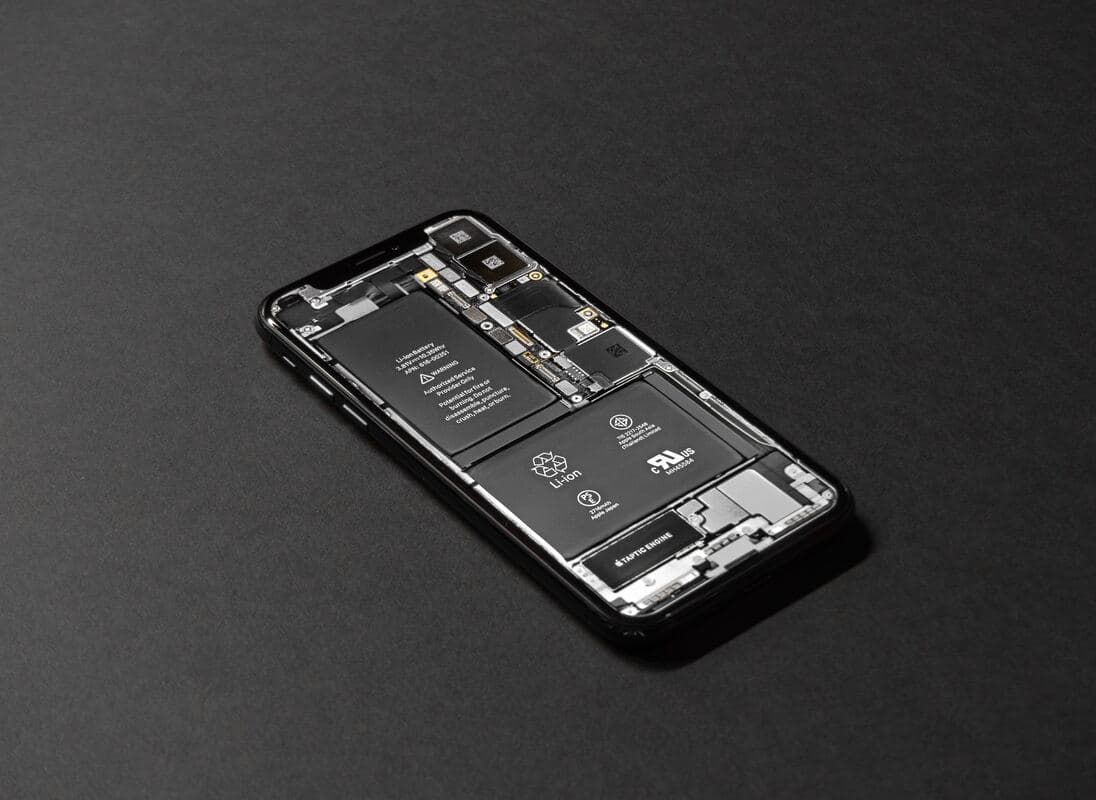
This image shows the single battery configuration of the iPhone 12, which uses a 3.85 V Li-ion battery with a capacity of 2815 mAh1.
Note: A single battery configuration is used in low-power devices such as wall clocks, memory backups, and wristwatches. It is also used in mobile phones and tablets that use lithium-ion (Li-ion) batteries, which have a nominal voltage of 3.6 V. Li-ion batteries are the most popular type of rechargeable batteries for smartphones, as they offer high energy density, low self-discharge, and no memory effect.
Fact: Li-ion batteries experience very little memory effect, which means you can recharge them before they are completely drained without affecting their capacity. Memory effect is a phenomenon where repeated partial discharging and recharging of a battery reduces its capacity over time.
Dual Series Battery Configuration#
Double the voltage, same current capacity. In a series connection, two batteries work together by adding their voltages while maintaining the same capacity. For example, two AA batteries in series provide 3 volts but still retain a capacity of around 2,000 mAh.
This setup is ideal for devices requiring higher voltage without an increase in current capacity. Many smartphones use dual-series batteries to support high-resolution displays or high-performance processors, which demand more voltage than a single battery can supply.
However, a series configuration may not be ideal for devices that prioritize longer battery life, as the overall current capacity remains the same as a single battery.
Advantages of Dual Series Battery Configuration:#
- It has a high voltage, which enables high-resolution displays and high-performance processors of the device.
- It has a simple connection, which does not require a smart circuitry to balance the cells.
- It can fit the shape or size of the device, which may improve the design and aesthetics of the device.
Disadvantages of Dual Series Battery Configuration:#
- It has the same current capacity as a single battery, which may not be enough for some features and functions of the device.
- It has a high internal resistance, which means more heat generation and less power delivery to the device.
- It requires the same voltage and capacity of the cells, which may cause an imbalance and damage the cells if they are not matched.
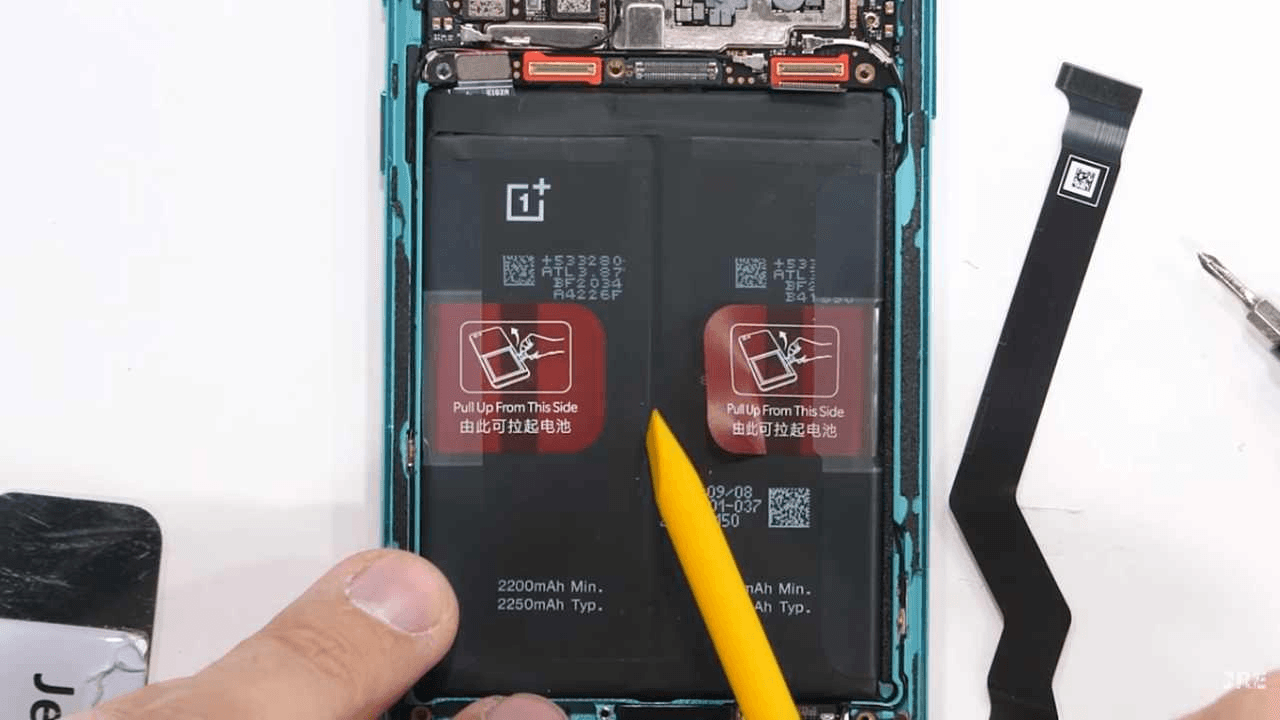
This image shows the dual battery configuration of the 8T, which uses two Li-ion batteries with a combined capacity of 4500 mAh.
Note: A single battery configuration is used in low-power devices such as wall clocks, memory backups, and wristwatches. It is also used in mobile phones and tablets that use lithium-ion (Li-ion) batteries, which have a nominal voltage of 3.6 V. Li-ion batteries are the most popular type of rechargeable batteries for smartphones, as they offer high energy density, low self-discharge, and no memory effect.
Fact: Li-ion batteries experience very little memory effect, which means you can recharge them before they are completely drained without affecting their capacity. Memory effect is a phenomenon where repeated partial discharging and recharging of a battery reduces its capacity over time.
Dual Parallel Battery Configuration#
Double the capacity, same voltage. In a parallel connection, two batteries work together by maintaining the same voltage while doubling the current capacity. Imagine two AA batteries placed side by side—they still provide 1.5 volts, but their combined capacity increases to around 4,000 mAh.
This setup is perfect for devices that need longer battery life or require more current for power-hungry features. Many smartphones use dual-parallel batteries to enhance fast charging and wireless charging, both of which demand higher current than a single battery can supply.
However, a dual parallel battery configuration may not be suitable for devices that need higher voltage, such as cameras or speakers.
Advantages of Dual Parallel Battery Configuration:#
- It has a high current capacity, which enables fast charging and wireless charging of the device.
- It has a long battery life, which reduces the frequency of charging and extends the lifespan of the battery.
- It has a low internal resistance, which means less heat generation and more power delivery to the device.
Disadvantages of Dual Parallel Battery Configuration:#
- It has the same voltage as a single battery, which may not be enough for some features and functions of the device.
- It requires a smart circuitry to balance the charge and discharge currents of the parallel cells and prevent overcharging or over-discharging.
- It may not fit the shape or size of the device, which may affect the design and aesthetics of the device.
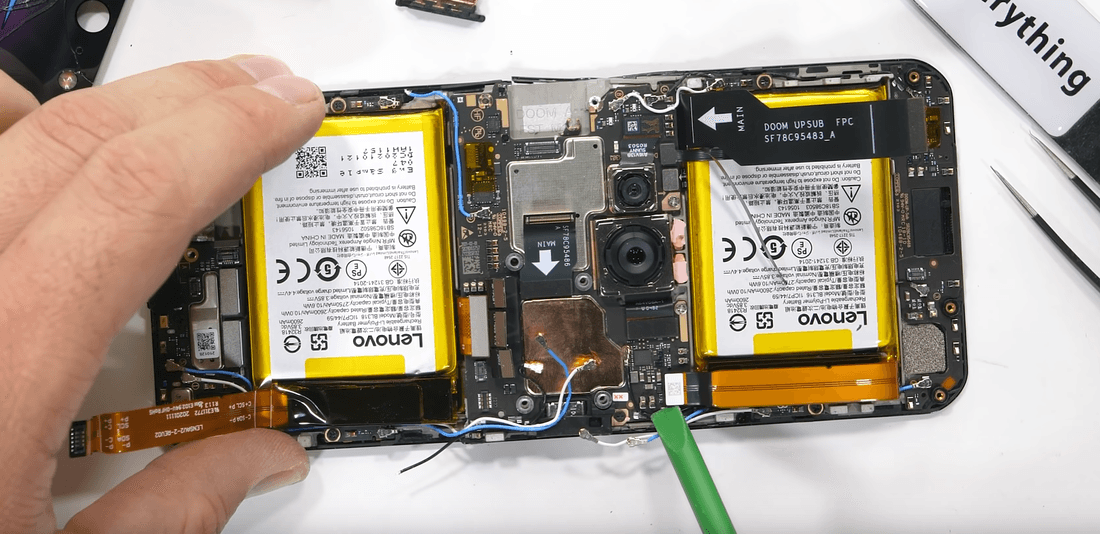
This image shows the dual battery configuration of the Legion Duel 2, which uses two Li-ion batteries with a combined capacity of 5500 mAh.
Note: A parallel connection is made by connecting the positive terminals of both batteries together and the negative terminals of both batteries together. This increases the current capacity by adding the ampere-hour (Ah) ratings of the batteries. A parallel connection also reduces the internal resistance of the battery pack, which means less heat is generated and more power is delivered to the device.
Fact: Modern day Li-ion batteries normally incorporate smart circuitry within the battery pack, which balances the charge and discharge currents of the parallel cells and prevents overcharging or over-discharging. Overcharging or over-discharging can damage the cells and reduce their lifespan.
L-Shaped Battery Configuration#
The L-Shaped configuration offers the best of both worlds by combining series and parallel connections. In this setup, two groups of batteries are connected in parallel, and then these groups are linked in series. The result? Higher voltage and increased current capacity.
Imagine an L-shaped arrangement of four AA batteries, delivering 3 volts and around 4,000 mAh. This setup is perfect for devices that need both high voltage and high current.
Many smartphones utilize L-shaped batteries to balance performance and battery life, while also optimizing space to fit curved or edge-to-edge designs without compromising battery capacity.
Advantages of L-Shaped Battery Configuration:#
- It has both high voltage and high current, which enables a balance between performance and battery life of the device.
- It has a low internal resistance, which means less heat generation and more power delivery to the device.
- It can fit the shape or size of the device, which may enhance the design and aesthetics of the device.
Disadvantages of L-Shaped Battery Configuration:#
- It requires a smart circuitry to balance the charge and discharge currents of the cells and prevent overcharging or over-discharging.
- It requires more space and materials than a single or dual battery configuration, which may increase the weight and cost of the device.
- It may expand due to temperature changes or aging, which may affect the performance and safety of the device.
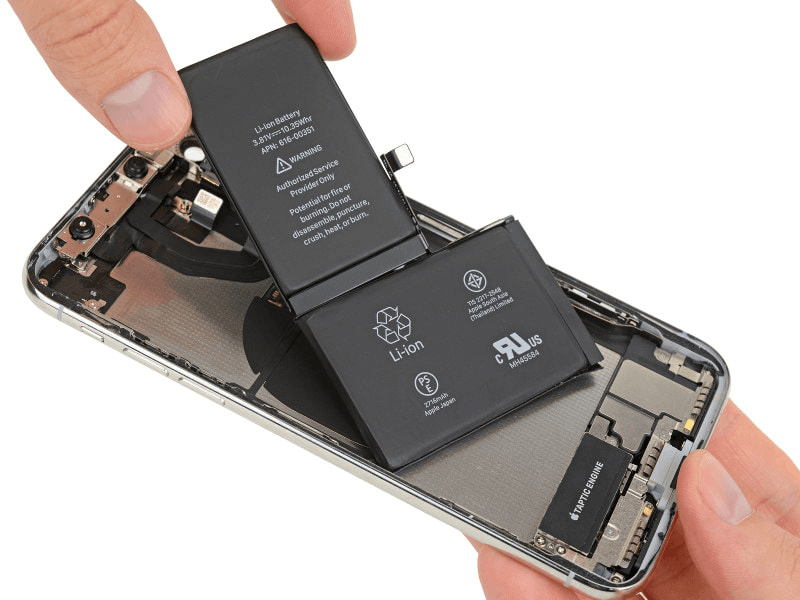
This image shows the L-shaped battery configuration of the iPhone X, which uses four 3.81 V Li-ion batteries with a combined voltage of 7.62 V and a capacity of 2716 mAh.
Note: An L-shaped battery configuration is a combination of series and parallel connections. It consists of two groups of batteries connected in parallel, and then those groups are connected in series. This increases both the voltage and the current capacity by adding the voltages and the ampere-hour (Ah) ratings of the batteries. An L-shaped connection also balances the internal resistance of the battery pack, which means less heat is generated and more power is delivered to the device.
Fact: L-shaped batteries are often used in smartphones that have a curved or edge-to-edge design, such as the iPhone X and the Samsung Galaxy S8. These batteries can fit the shape of the device better and provide more space for other components. L-shaped batteries also allow for faster charging and wireless charging, as they can handle higher current than a single or dual battery configuration.
Conclusion#
Smartphone battery configurations are a subtle art, each offering a unique balance of voltage and current to meet the diverse needs of users. From the simplicity of a single cell to the sophistication of L-shaped designs, manufacturers tailor these configurations to optimize performance and efficiency. Next time you pick up your smartphone, remember the intricate dance happening within its battery, delivering power in the most efficient way possible.
Smartphone battery configurations are a delicate balance of voltage and current, carefully designed to meet diverse user needs. From the simplicity of a single-cell battery to the sophisticated L-shaped designs, manufacturers fine-tune these setups to maximize performance and efficiency.
Next time you pick up your smartphone, take a moment to appreciate the intricate engineering within its battery, ensuring seamless power delivery in the most efficient way possible.